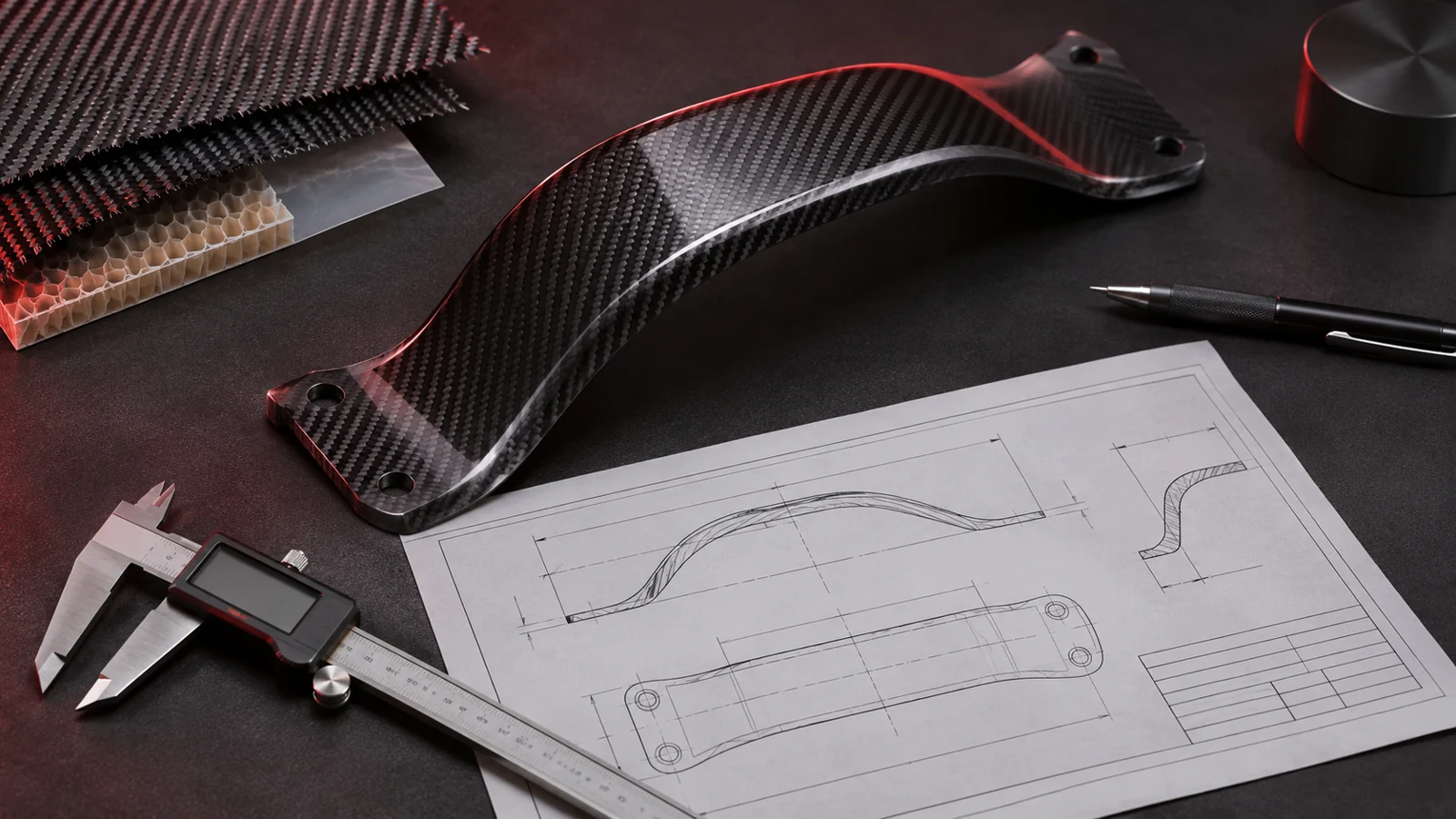
Begin with the project, not a ranking
It is tempting to place composite processes in a simple order from basic to premium. That does not answer the practical question of which approach suits a particular component. Geometry, quantity, tooling, finish and acceptance requirements all influence the choice.
The visible weave alone does not identify the construction or confirm performance. Start by defining the job the part must do, the available reference information and the constraints. Comparing methods against the same brief is more useful than selecting whichever process has the most impressive name.
Hand lay-up: direct work with reinforcement
In hand lay-up, reinforcement is placed in the mould and wetted with resin during the lay-up operation. This differs from introducing resin through previously arranged dry reinforcement or using material supplied already impregnated.
For a customer, the useful discussion concerns how the shape, surface and production scope will be handled. Prototypes, covers and short runs may be considered, subject to the specific design. The method does not by itself mean poor quality or the lowest total cost. Preparation, workmanship and agreed acceptance criteria still matter.
Vacuum infusion: plan before introducing resin
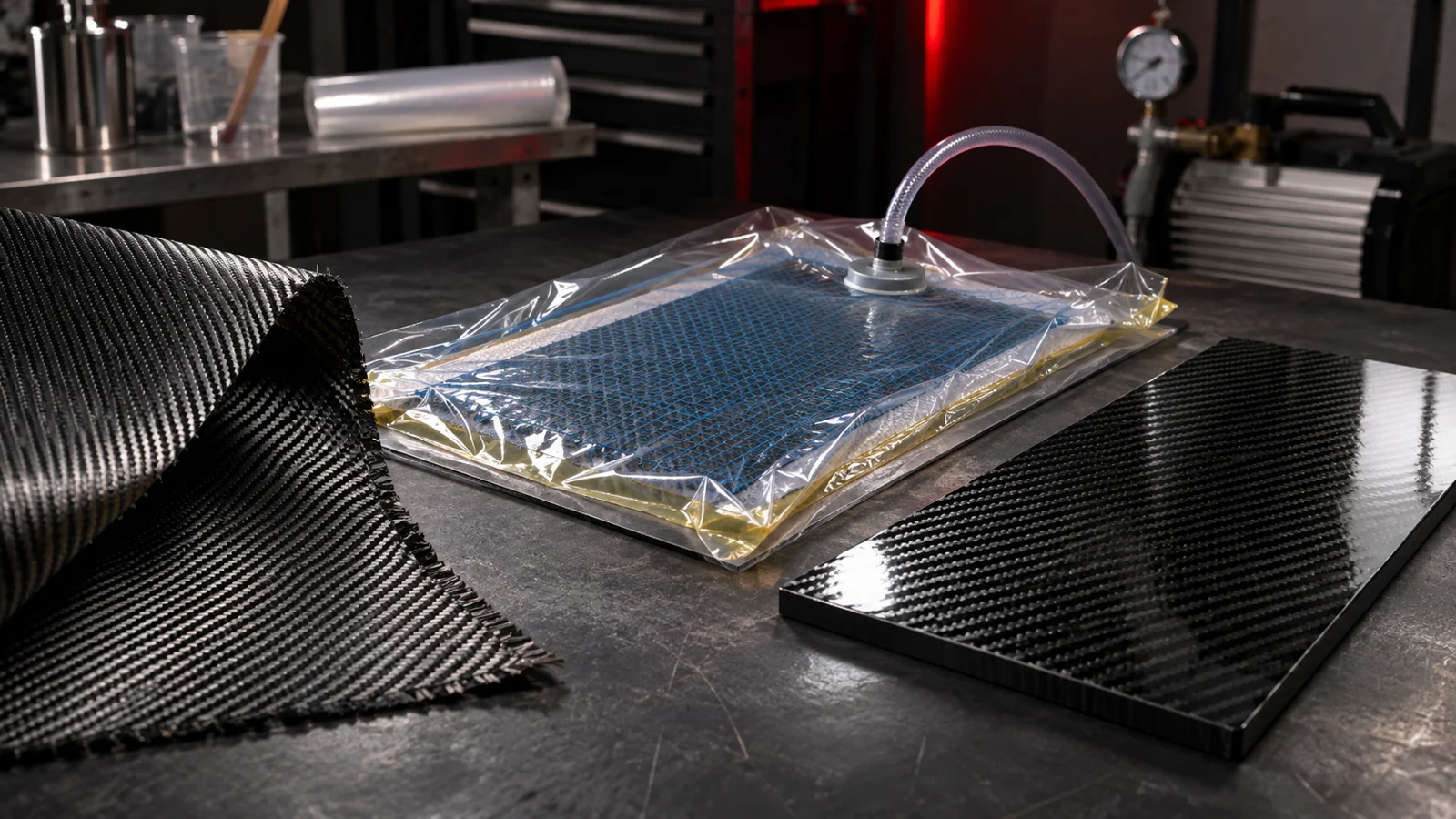
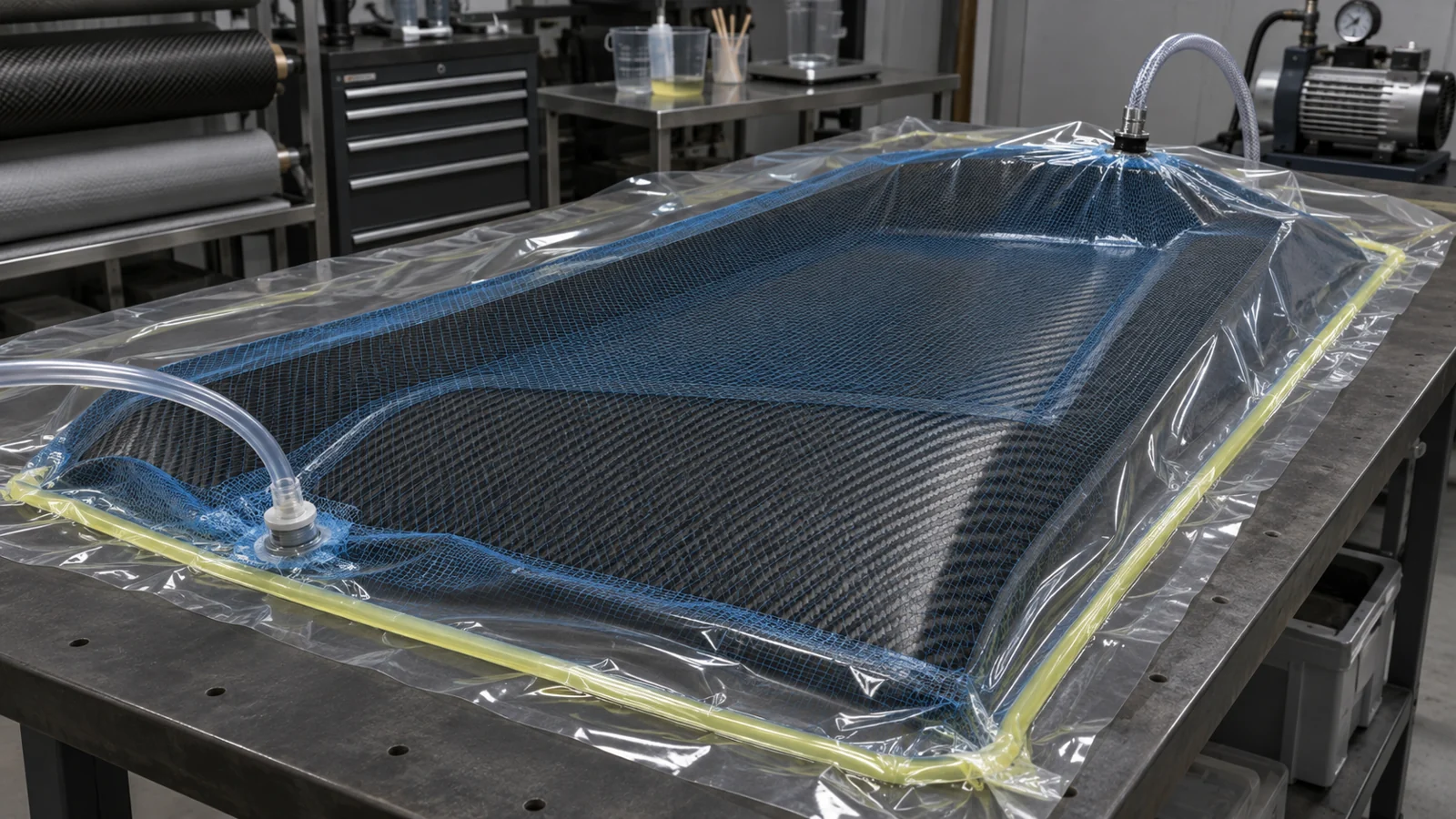
Infusion begins with dry reinforcement arranged in the mould and a sealed bagging arrangement. A pressure difference enables resin to flow through the prepared lay-up. Planning that flow and checking the seal are important preparation stages.
Ask how the geometry, mould split and access to edges affect the proposed process. Infusion is more than simply removing air from an arbitrary part. A panel or housing can be a useful starting point for discussion, but the suitability of the complete arrangement must be assessed for the component. The resin and consumables are selected as part of that process plan.
Prepreg: working with pre-impregnated material
Prepreg contains reinforcement already impregnated with resin. Plies are arranged and subsequently consolidated and cured according to the selected material system. Storage conditions, working time and cure requirements come from its documentation.
Different prepreg systems are intended for different processing arrangements. The word alone does not confirm autoclave processing or particular performance figures. Ask what material, tooling and equipment are proposed, and which requirements will be checked. This is especially relevant when the component is expected to comply with an existing engineering specification.
A practical comparison checklist
- Shape: radii, recesses, edges and access to difficult areas.
- Tooling: availability, condition and process suitability.
- Surface: visible faces and further finishing.
- Function: mass, stiffness, environment and interfaces.
- Quantity: prototype, short run or later batches.
- Acceptance: agreed inspection and documentation.
Two quotations for the same outline shape can include very different work. Agree a common scope before deciding whether a price difference is meaningful. Ask which assumptions need confirmation and what would happen if the geometry changes.
Appearance and construction are different questions
A regular weave and an attractive finish can be important on an exposed component. They are not a substitute for information about reinforcement directions, interfaces or the intended construction. A surface ply may serve an aesthetic purpose while the rest of the lay-up addresses other requirements.
Show a reference if the component must visually match another part. Specify weave orientation and the desired finish separately from functional requirements. A good project brief covers both areas and does not treat a photograph as evidence of mechanical performance.
Use a prototype to check assumptions
An early sample can support a fitting check, a surface review or a particular test. Define its purpose: a finish sample, a geometry model and a functional prototype are different deliverables. Agree what will be inspected before commissioning the sample.
Check mounting access, clearances, neighbouring parts and how the component will be handled during installation. Record feedback against the approved geometry revision. Discuss which changes can be made within the existing tooling and which would require additional preparation. These questions often have as much influence on the project as the process itself.
Common questions about the three methods
Will prepreg always produce the lightest part?
A process name alone cannot establish that. Compare actual constructions and requirements.
Is infusion suitable for every shape?
Geometry, reinforcement placement and the planned flow arrangement need assessment.
Can hand lay-up achieve an attractive surface?
Appearance can be part of the specification, but the expected result should be agreed with the manufacturer, ideally using a sample.
Where do I start without process knowledge?
Provide the application, photographs or model, quantities and surface expectations.
Turn the comparison into an enquiry
Prepare one component brief and distinguish fixed requirements from areas open to suggestions. If you want more than one process considered, compare them against the same geometry, production quantity and acceptance scope.
The individual MDA Composite technology pages explain hand lay-up, vacuum infusion and prepreg in more detail. Use them as a starting point for discussion. The final selection should follow the project and the available manufacturing arrangement, rather than fashion or appearance alone.